At the latest Constructing Excellence Climate Action Group meeting, members explored how artificial intelligence can support faster, smarter progress toward more sustainable buildings and infrastructure. The session was led by Nick Tune of Optimise AI, who shared practical examples of how digital twins, machine learning and large language models are being applied to improve energy and water performance across building portfolios. Rather than treating AI as a future concept, the discussion focused on how it is already generating live insights, improving decisions and supporting costed routes to lower-carbon outcomes.
- AI is already delivering practical sustainability gains in buildings The discussion showed that AI is not just a future concept. It is already being used to analyse live building data, identify inefficiencies, model improvement options and support lower-carbon decisions across estates, stations, schools and housing.
- The real value comes from connecting fragmented data A major theme was that building performance data often sits in silos. By bringing together meter data, sensors, BMS information, BIM models and other sources into a digital twin, organisations can get a much clearer view of performance and make faster, better-informed decisions.
- Housing is a major opportunity, but governance matters The group highlighted strong potential for AI to improve retrofit outcomes, spot issues early and better support tenants, especially in social housing. At the same time, they raised important questions around ethics, consent, data governance and the energy footprint of AI, making responsible use essential.
Combining data sources into a live picture of building performance is critical to unlocking sustainable outcomes. Traditional building management often relies on disconnected data from meters, sensors, building management systems and reports, making performance hard to assess in the round. Optimise AI brings these streams together through a digital twin framework that works at different levels of detail, from buildings with a single smart meter to highly instrumented assets with room-level data, BIM models and sensor networks. This helps asset owners spot inefficiencies, benchmark performance and prioritise interventions more quickly and confidently.
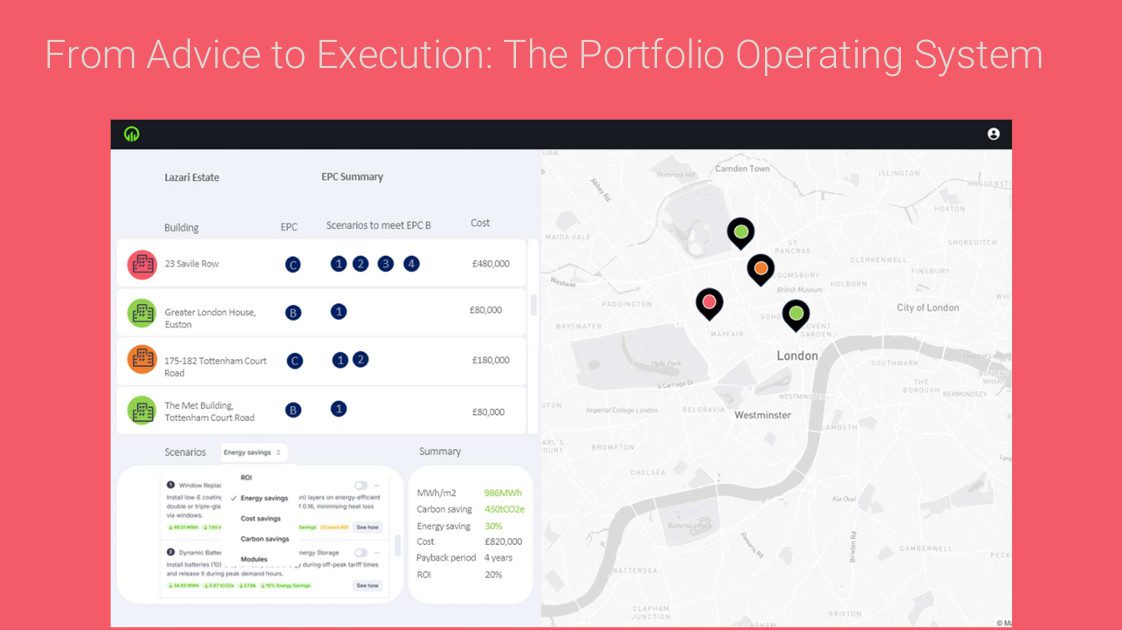
The examples showed the breadth of application, from estate-level analysis across offices and commercial portfolios to optimisation at Bristol Temple Meads station and monitoring in schools and housing. In practice, the technology can estimate building performance, identify the sources of energy use and carbon emissions, and model the most cost-effective improvement measures, such as heating upgrades or routes to stronger EPC performance. In more advanced settings, it can also support dynamic optimisation, for example adjusting lighting schedules while maintaining operational and safety standards.
The conversation highlighted major opportunities in housing, particularly in using real performance data to understand retrofit outcomes, identify issues early and better support tenants. Participants discussed how AI could help flag underperforming heat pumps, damp and mould risks and unexpected cost impacts before problems escalate.
Alongside the enthusiasm, the group raised important questions about ethics, data governance and AI’s own energy demand. Nick argued that, when used well, AI can deliver carbon savings far greater than its footprint, but only if applied to meaningful problems.
About OptimiseAI
Optimise AI is a Cardiff-based technology business focused on helping building and estate owners reduce energy use, cut carbon emissions and improve compliance. Its platform combines smart meter data, building physics, machine learning and semantic digital twin technology to turn fragmented building information into practical, costed actions. Designed to work even where data is limited, the platform supports organisations in planning routes to EPC B, net zero and wider building performance improvements across single assets and large estates.