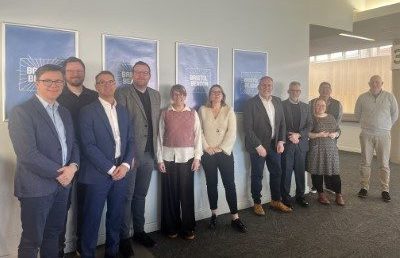
The South West is under pressure to deliver homes at pace—without repeating the mistakes of the past. In March, BRE, Constructing Excellence South West and Constructing Excellence National convened senior voices from across housing, planning, delivery, insurance and education to explore what is really stopping good homes from being built. This article distils the key insights—and what they mean for those shaping delivery on the ground.



High Standards, Fragile Viability: Are we asking the impossible?
Participants repeatedly highlighted a tension between the aspiration for high housing standards and the practical constraints of viability, policy lag, and cost escalation.
- Several contributors noted that striving to build “the best of the best” has become financially unsustainable given current grant levels, labour shortages, and inflationary pressures. Some local authority teams acknowledged needing to explore slightly less ambitious specifications to keep schemes deliverable.
- Despite this, there was strong consensus that quality cannot be allowed to deteriorate, especially given lessons from past decades where homes built cheaply now impose major retrofit burdens.
- The discussion around the Future Homes Standard showed frustration that it remains two years away, with some suggesting that when compliance is optional, segments of the market will avoid higher standards if not forced by regulation.
- Stakeholders argued that build-to-rent, co‑living, and student housing operators tend to maintain higher quality because they bear long‑term operational and maintenance costs—an incentive misaligned with speculative for‑sale developers.
- Concerns around inconsistent standards were also tied to fire safety, snagging volumes, and diluted site skills, with participants reporting instances of hundreds of snags per property, unlike other countries where “snagging” hardly exists due to manufacturing‑led, standardised processes.

Deliverability: System Friction, Viability Barriers, and Place Making
Deliverability emerged as one of the most acute issues. Even where planning permissions exist, stakeholders emphasised that “you can’t live in a planning permission.” These failures have the greatest impacts on the most vulnerable. They translate into higher rents for private tenants, fewer genuinely affordable homes for first-time buyers, and prolonged uncertainty for communities living alongside stalled sites.
Blockers in the planning and infrastructure system
Participants described:
- Widespread holding objections—especially from National Highways—across major junctions on corridors such as the M5 and M4.
- These delays create uncertainty, trigger rising debt‑finance costs, and ultimately render many schemes unviable.
- Some localities require massive infrastructure investment (e.g., new motorway junctions, highways realignments) that far exceed available local budgets.
Funding uncertainty
The new National Housing Delivery Fund, replacing multiple previous pots, remains unclear even as go‑live dates approach. Local authorities are attempting to plan amid:
- No certainty on revenue funding.
- Insufficient capital allocation once top‑sliced for combined authorities and New Towns.
- A requirement from central government to prioritise starts within the current Parliament, creating pressure to back smaller, fast‑starting schemes over large regeneration programmes.
Regional dynamics and political alignment
Despite the operational challenges, participants noted that recent political shifts have created greater regional consensus about the need for homes, but local political sensitivities—especially around density, character, and change—continue to constrain delivery. For households this translates into very real trade-offs: longer commutes, overcrowded rentals, homes that overheat in summer or are costly to run, and a growing sense that new development will erode – not improve- local life.
Many lamented the fragmented engagement processes and the frequent disconnect between community narratives online and formal planning forums. This often fuels resistance that delays or derails schemes. Some authorities are experimenting with community champions, simplified language, and myth‑busting communications to combat misinformation.

Skills: A Pipeline Under Strain and a Cultural Challenge
Skills shortages were identified as one of the highest‑risk factors for delivery, quality, and long‑term sector resilience.
A broken pipeline
Contributors from education, construction, and consultancy described:
- Declining numbers entering further education construction programmes.
- A mismatch between college training and modern construction methods.
- A generational dilution of skills, where those teaching may themselves have gaps due to decades of fragmentation in training.
- A cultural perception problem: construction is often still positioned to young people as a fallback option rather than a high‑tech, high‑impact career.
Lowest-cost, risk-transferring procurement models actively discourage investment in skills, MMC, and longer-term quality. They reward firms that minimise upfront cost and externalise risk—precisely the behaviours later blamed for defects, insurance inflation, and skills erosion.
Changing nature of work
Participants noted growing need for:
- Off‑site manufacturing skills.
- Digital skills (e.g., BIM, MMC oversight, 3D design).
- High‑precision assembly competences.
- Traditional roles (e.g., groundwork) that cannot be replaced by factory production.
The group contrasted UK site culture with more industrialised European models where standardisation reduces on‑site defects, training is more structured, and young people experience clearer career pathways.
Retention & culture
One striking insight was that the average career span of women in construction is only four years, often due to exclusionary culture and poorly designed facilities. This loss worsens shortages and reduces diversity of thought.
Participants agreed that the sector must transform its workplace culture, create visibly supportive environments, and engage children much earlier—with some pointing out that young people already build virtual communities in games like Minecraft, which could be harnessed to inspire real‑world construction engagement.

Economics: Viability Collapse, Grant Limitations, and Inflation
Economic pressures were a dominant thread.
Viability evaporation
Across the South West and nationally, schemes requiring grant intervention are facing:
- Build cost inflation.
- Higher interest rates.
- Rising insurance premiums.
- Increased regulatory requirements (especially around fire safety and building control).
Developers, councils, and Homes England repeatedly stressed that many schemes are simply not viable, even with grant support, leading to stalled developments and slowing supply.
Cost of risk
Insurance specialists explained that:
- SMEs struggle with rising contract values, legal responsibilities, and insurance demands.
- Premiums escalate due to higher perceived risks from workmanship, regulatory change, and supply chain fragility.
- Insurance is often viewed as a barrier, but could be an enabler if aligned earlier in project development.
Misalignment across actors
Participants highlighted systemic flaws:
- Landowners capturing uplift through Section 106 readjustments.
- Developers optimising for short‑term profit rather than whole‑life cost.
- Local authorities trying to meet affordability needs within constrained budgets.
- Government setting ambitious numerical targets detached from on‑the‑ground feasibility.
Policy volatility (e.g., ministerial changes, shifting frameworks, late guidance) further compounds uncertainty.
A System Designed for Certainty—Operating in Permanent Flux
Volatility—political, economic, social, and supply‑chain—was seen as one of the biggest systemic risks.
Policy churn
Participants cited:
- Rapid shifts in the National Planning Policy Framework.
- Housing minister turnover.
- New regulatory timelines (e.g., Future Homes Standard).
- Reorganisations of local government structures.
- Constant consultations across planning, skills, and housing.
This turbulence makes long‑term planning extremely difficult for both the public and private sectors.
Market volatility
Stakeholders reported:
- Frequent cost shocks (materials, labour, insurance).
- Unpredictable sales markets.
- Rising and shifting social expectations about density, design, heritage, and climate resilience.
Many schemes leave planning with strong design intent but encounter a viability recalculation once land is contracted, finance secured, and procurement underway. At this stage, specification reductions become the primary mechanism for absorbing risk—quietly eroding quality while maintaining headline unit numbers.
Lowering standards offers short-term relief but creates long-term liabilities: higher retrofit costs, rising health impacts, insurance exposure, and public mistrust. In this sense, compromising standards does not solve viability—it merely defers and multiplies its costs.
Industry fragmentation
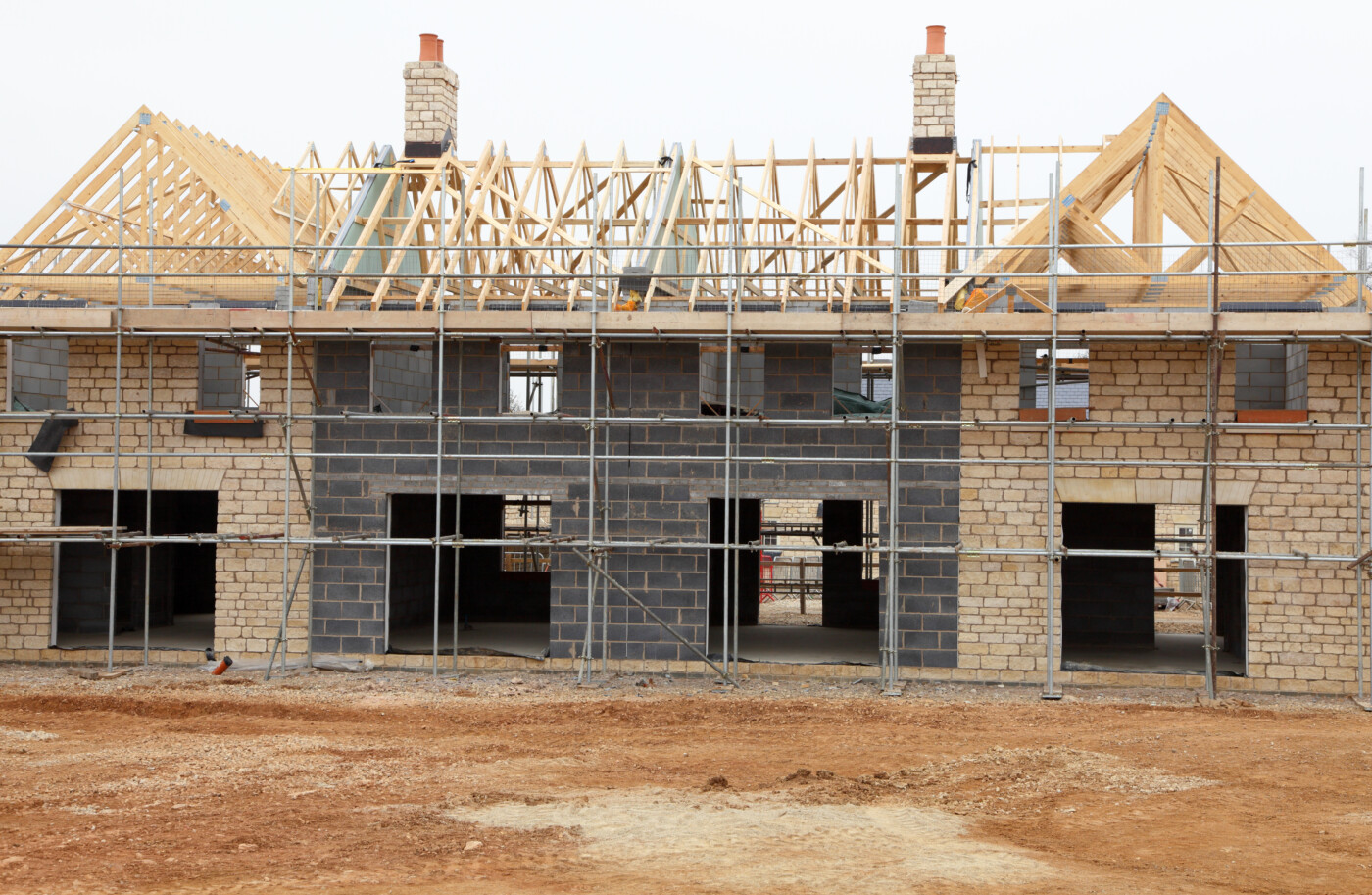
A recurring frustration was the UK’s extreme fragmentation:
- Too many small firms without the capital to invest in training or modernisation.
- Limited standardisation across designs, components, and processes.
- A supply chain where each project is bespoke, increasing risk and reducing productivity.
Several participants argued for a move toward greater standardisation, both to raise baseline quality and to simplify skill requirements.
Participants were clear that higher quality does not require bespoke design or slower delivery. International experience shows that standardisation—when done well—reduces defects, shortens build programmes, and eases skills pressure, while still allowing architectural variation at place level.
Conclusion
The roundtable painted a vivid picture of a housing delivery system under immense pressure. While the ambition for better homes, better places, and better outcomes is universally shared, the pathway is obstructed by systemic constraints: policy uncertainty, economic volatility, infrastructure deficits, skills shortages, and misaligned incentives. Yet there was also optimism—rooted in cross‑sector collaboration, a renewed regional political alignment, and the belief that through standardisation, culture change, and early intervention in education, the sector can build a stronger, more resilient housing ecosystem.
Housing delivery is not just a supply challenge but a public value system—shaping health outcomes, regional productivity, educational attainment, and trust in institutions. The choices made about standards, skills, and certainty therefore extend far beyond the boundary of individual schemes.