

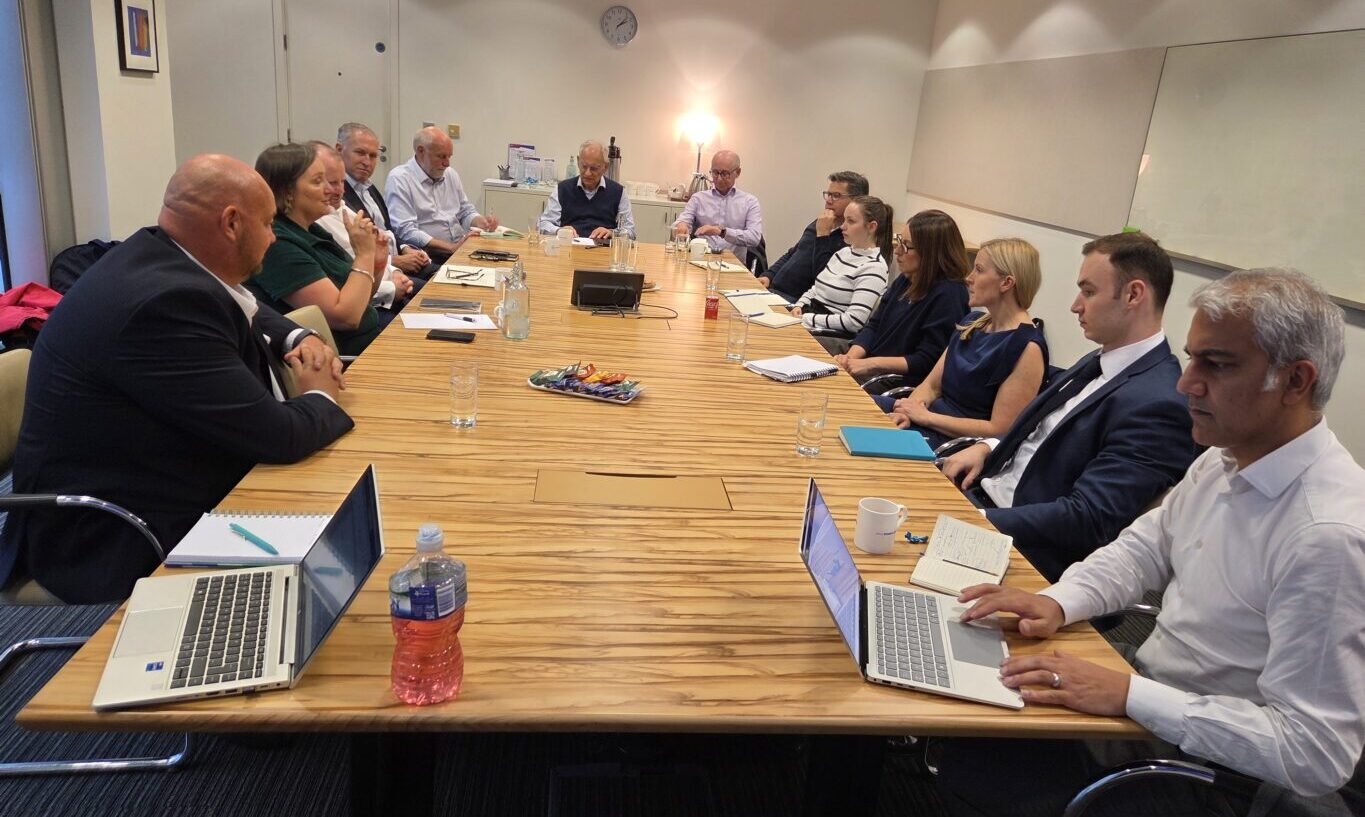
The UK’s infrastructure ambitions are vast, with the ten-year infrastructure strategy highlighting needs across housing, healthcare, transport, and energy. However, Constructing Excellence’s recent members roundtable, hosted by Trowers & Hamlins, highlighted the many challenges to successful delivery – from outdated finance models to fragmented planning and inconsistent funding. Industry leaders gathered to explore how procurement and finance must evolve to meet the demands of modern construction, net zero goals, and long-term resilience.
From PFI to Flexibility: A New Era of Project Finance
Traditional Private Finance Initiative (PFI) models have long been criticised for their rigidity, high tendering costs, and inability to adapt to changing needs. CE members agreed that future project finance must be more agile. Contracts should allow for evolution over time—especially as assets must respond to technological advances and environmental targets like net zero. The consensus was clear: flexibility must be built into the DNA of future finance models.
Strategic alliances and rolling facilities management contracts were proposed as alternatives to the confrontational and costly nature of legacy PFI. These models could reduce wasted bid costs and foster collaboration from the outset. Importantly, any new approach must balance risk and reward more equitably, ensuring that both public and private stakeholders are incentivised to deliver long-term value.
Building Confidence Through Pipeline Visibility
A recurring theme was the need for a consistent and visible pipeline of projects. Without it, innovation—particularly in Modern Methods of Construction (MMC)—is stifled. Factories face “stop–go” cycles, and supply chains struggle to maintain momentum. Participants urged government to commit to long-term funding visibility, enabling industry to plan, invest, and deliver with confidence.
The group also called for government to shift its role from client to enabler. By leveraging public funds to attract private investment, government can unlock early-stage infrastructure—roads, utilities, and energy—that make housing and development viable. This “plug and play” approach was seen as essential to accelerating progress and reducing planning bottlenecks.
MMC and Industrialised Construction: The Productivity Imperative
MMC has shown promise, particularly in healthcare, where panellised systems have delivered projects on time and on budget. However, housing has lagged due to inconsistent workflows and planning delays. The roundtable advocated for a shift towards industrialised construction, using standardised “kits of parts” that reduce project-specific risk and allow easier handover between contractors.
This approach not only improves productivity but also supports circular economy principles—such as modular leasing and reuse. Examples from transport and healthcare illustrated how adaptable, shorter-lifespan buildings can be financed and delivered more efficiently. But success hinges on a stable pipeline and serious commitment to continuous work.
Contracts That Enable Collaboration
Collaboration is a cornerstone of successful delivery. Participants stressed the importance of bringing funders, designers, and contractors together at the earliest stage. Alliancing and insurance-backed models were highlighted as ways to share ownership, reduce risk, and avoid costly redesigns later in the process.
The group also called for an end to lowest-cost tendering, arguing that quality must be prioritised over price. Stable, collaborative contracts can help align design, delivery, and finance—ensuring that assets are built to last and adaptable to future needs. Clients must understand that cutting costs undermines long-term value and investor confidence.
Making Industry Investible
To attract private finance, the construction industry must demonstrate delivery certainty, competence, and consistent quality. Funders are most concerned about the design and construction phase, where risk is highest. The roundtable emphasised the need for capable supply chains, robust governance, and competitive returns to build trust with financial institutions.
Participants also noted that the finance community must evolve. New skills, insurance models, and contractual mechanisms are needed to support innovation and adaptability. Funders must accept measured levels of risk to enable future-proof assets that meet environmental and social goals.
A Call to Action
The roundtable concluded with a clear message: reform is essential. Government must commit to funding visibility and act as an enabler, not just a client. Industry must improve delivery certainty and embrace collaboration. And the finance sector must support innovation through flexible, investible models.
If these changes are embraced, the UK can unlock its infrastructure ambitions—delivering homes, hospitals, and transport systems that are resilient, sustainable, and fit for the future.
The next roundtable in this series will take place on Wednesday 26th November with a focus on the Infrastructure Strategy.
The Ten Year Infrastructure Strategy and associated Infrastructure Pipeline set out a clear rationale for what investments will be made across the UK and how those fit into the wider strategy to drive growth. This session will build on the outcomes from our recent roundtable with Pinsent Masons, looking at the challenges and opportunities for delivering that strategy. We will be considering what the strategy means for us, where the opportunities are to drive Constructing Excellence principles, and how Constructing Excellence members take the best advantage of those opportunities.
Get in touch to find out more.